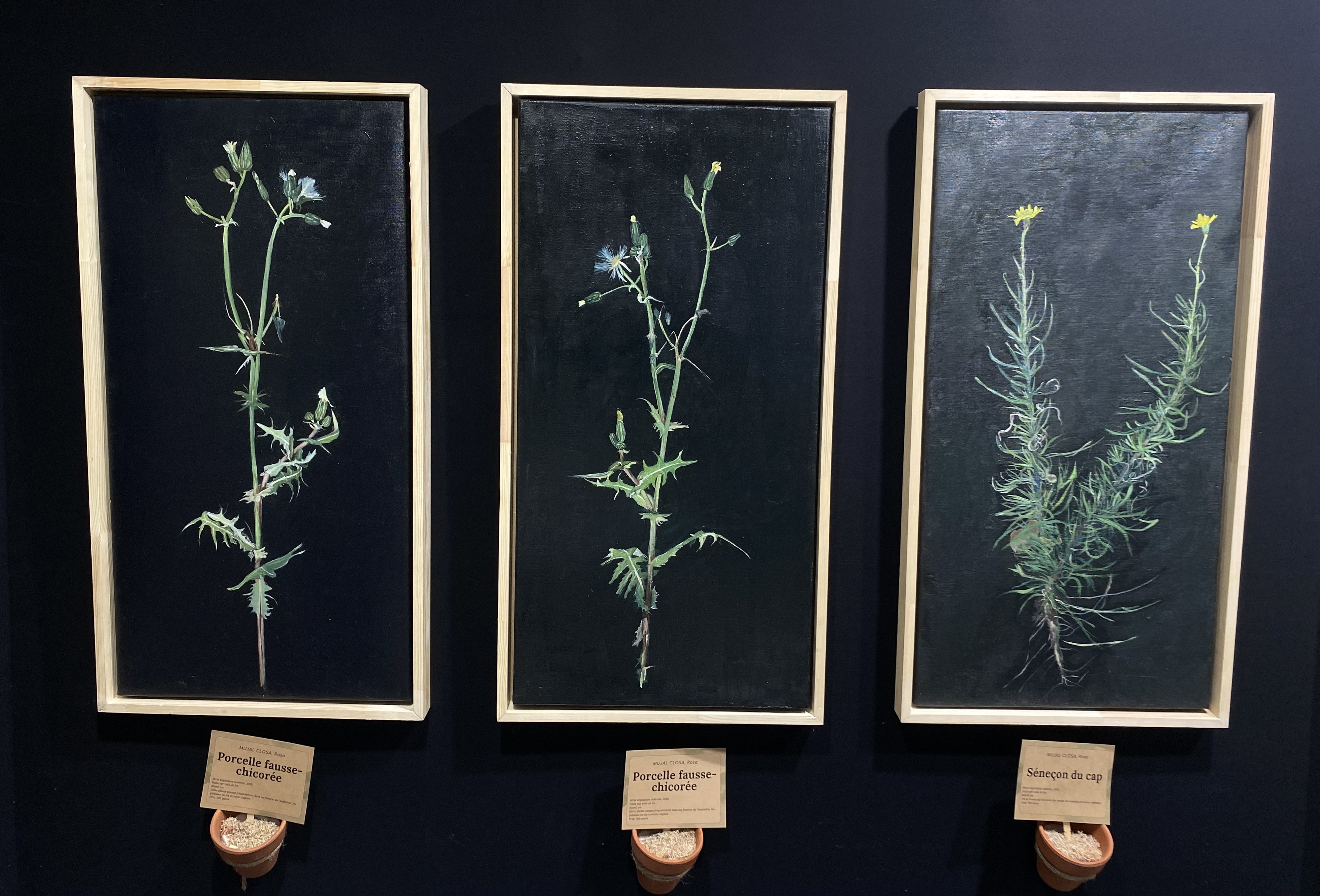
LA RÉSISTANCE In his lecture “What Is the Act of Creation?”, delivered on 17 March 1987 as part of the Mardis de la Fondation Fémis, Gilles Deleuze addressed this question by quoting Malraux: “Art, he says, is the only thing that resists death.” Two minutes later, he continues: “So what is the relationship between the act of resistance and art, and the work of art? All acts of resistance are not works of art, although, in a certain way, they are. Every work of art is not an act of resistance, and yet, in a certain way, it is.” In my country, landscapes are now profoundly transformed by the excess of construction. We attempt to bring human beings closer to nature and, paradoxically, we drive them away from it. This is also what Augustin Berque describes in Thinking the Landscape (Éditions de la Colline, p. 93), when he evokes the concept of “killing the landscape”: “This is precisely why overdevelopment is the crudest form of violence, and why our way of life is unsustainable: environmentally destructive, ethically unjust (because it is accompanied by growing inequalities), and aesthetically unacceptable (because it kills the landscape).” . And among all these constructions, certain plants resist as well. They emerge in the gaps, pierce through the bitumen, and bloom among brick walls. This resistance is, for me, the creation of possibility. It is about making possible what tends to disappear under the acceleration of capitalism. That is why it seemed obvious to me to represent this hardy vegetation: to show how nature can resist the imposition of human beings.


